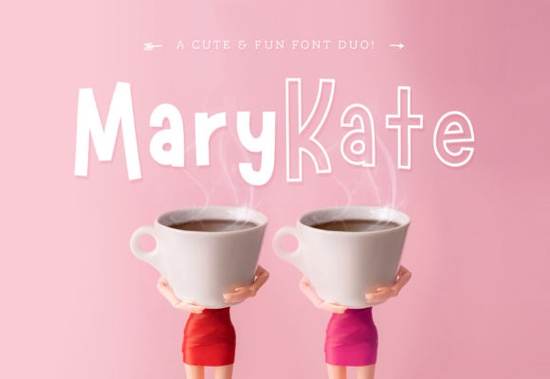
If you're looking for a friendly, flexible font that works just as well on a hand-lettered wedding invitation as it does on a modern t-shirt design, the Marykate Font is worth your time. It’s not overly decorative or hard to read instead, it strikes a relaxed balance between playful and polished. That makes it especially useful if you’re designing for real-world projects where clarity and charm both matter.
What kind of font is Marykate?
Marykate is a sans-serif font duo: one version with solid letterforms and another with clean outlines. Both share the same friendly proportions and open spacing, so they pair effortlessly no guessing required. You’ll get OTF and TTF files, plus a handy PDF guide showing how to access alternates and stylistic sets in design apps like Adobe Illustrator or Canva.
Because it’s built with versatility in mind, Marykate avoids extremes: no exaggerated swashes, no tight condensed widths, and no distracting embellishments. That’s why it fits naturally into categories like home decor, quote graphics, blog headers, and small-business branding places where legibility and warmth go hand in hand.
Where does Marykate work best?
Think about the things you make regularly: a printable wall quote for a nursery, a set of matching bridal shower tags, a logo for a local coffee shop, or even layered vinyl designs for mugs and tote bags. Marykate handles all of those without needing extra tweaks or workarounds.
It’s also a practical choice for print-on-demand sellers who need fonts that scale cleanly across sizes from tiny product thumbnails to large poster mockups. The outline version adds visual interest when used as a layer behind the solid version (a classic “shadow” effect), and both versions remain crisp at any resolution.
For crafters using Cricut or Silhouette machines, the clean vector paths mean smoother cuts and fewer node adjustments. And since it includes both uppercase and lowercase letters, numbers, punctuation, and basic multilingual support (including accented characters for Spanish, French, and German), it’s ready for more than just English-language projects.
How does it compare to other friendly sans-serifs?
Like the Marykate Font, many popular sans-serif fonts aim for approachability but few include a built-in outline companion right out of the box. That saves time when you want contrast without switching families. Compare it to something like the Houte Font, which leans slightly more geometric and structured. Marykate feels softer, rounder, and more handwritten-adjacent not quite script, but full of quiet personality.
You’ll notice subtle details: gently curved terminals, balanced x-height, and generous counters (the open spaces inside letters like ‘a’, ‘e’, and ‘o’). Those aren’t flashy features, but they’re what keep text easy to read at small sizes and pleasant to look at in larger displays.
Real uses from real creators
A small-batch candle maker used Marykate for her product labels pairing the solid version for the scent name and the outline for the tagline underneath. A teacher created classroom posters with it, adjusting letter spacing to fit tight margins without sacrificing clarity. A wedding stationery designer layered both versions to build elegant digital invites that translated cleanly to foil-stamped paper.
One thing users consistently mention: it doesn’t feel “trendy” in a way that dates quickly. It’s not trying to mimic handwriting or mimic retro signage it’s simply a well-drawn, contemporary sans-serif that supports your message instead of competing with it.
Getting started with Marykate
After downloading, install both font files (solid + outline) on your computer. In most design tools, they’ll appear under the same family name often listed as “Marykate” and “Marykate Outline”. Try typing the same phrase in both, then adjust size, color, or spacing to see how easily they combine.
For quick contrast: set the outline version slightly larger and behind the solid version, or use them side-by-side in a two-line headline (“Hello” in solid, “World” in outline). If you’re working in Canva, upload both as custom fonts they’ll show up separately in the font menu, so no need to hunt for stylistic sets.
Need inspiration? Check out real examples on Marykate Font you’ll find SVG bundles, mockups, and ready-to-edit templates made specifically for this family.
- ✅ Install both font files before designing
- ✅ Test readability at 12pt and 72pt it should hold up at both
- ✅ Use the outline version as a background layer, not standalone body text
- ✅ Pair with simple serif fonts (like Lora or Merriweather) for contrast in branding
- ✅ Avoid overusing alternates stick to the default character set unless you need a specific glyph
If you already own a few script or display fonts but feel limited when you need clean, readable type, Marykate fills that gap quietly and reliably no learning curve, no compatibility surprises, and no need to overthink it.
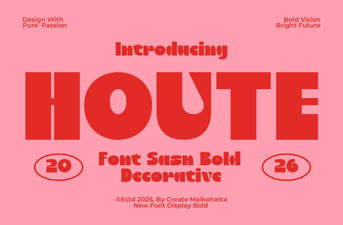 Houte Font: Elegant & Versatile Design Typography
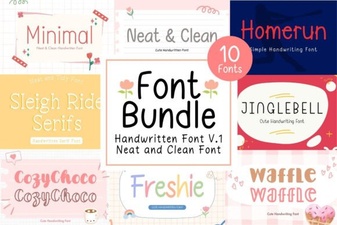 Neat & Clean Handwritten Fonts for Creative Projects
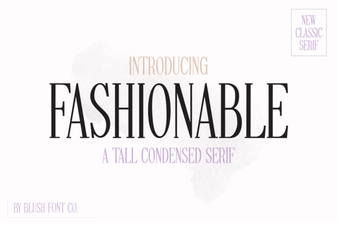 Stylish Fonts for Creative Design Projects
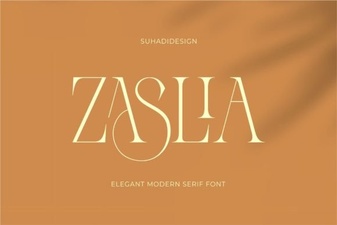 Zaslia Font: Elegant & Versatile Design Inspiration
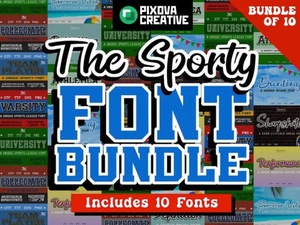 Sport Bundle Font: Creative Design & Project Ideas
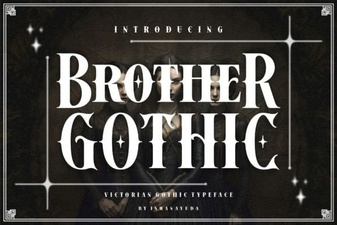 Brother Gothic Font: Bold Design Ideas