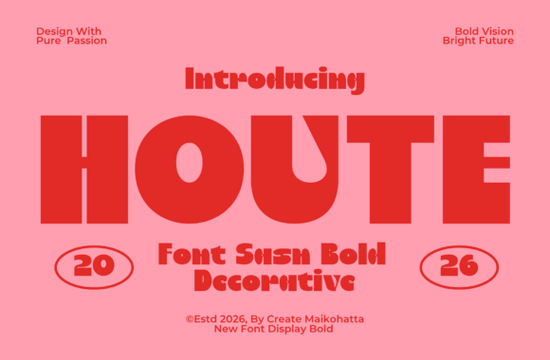
If you're looking for a bold, retro-inspired display font that works well for posters, logos, social graphics, or print-on-demand merchandise, Houte Font is a thoughtful choice. It’s not just another vintage-style typeface it’s carefully drawn with soft curves, generous letterforms, and subtle decorative details that give it warmth and personality. Unlike overly distressed or gimmicky retro fonts, Houte feels intentional and balanced: confident enough for headlines, friendly enough for small-business branding, and versatile enough to pair with simpler sans-serifs or clean layouts.
Who is Houte Font best suited for?
Small business owners launching a new product line, designers building cohesive brand identities, crafters creating custom greeting cards or wall art, and print-on-demand sellers developing themed collections will find Houte especially useful. Its thick strokes and open spacing make it highly legible even at smaller sizes on apparel tags or packaging, while its visual weight ensures impact in large-format applications like event posters or Instagram story headers.
It fits naturally into projects with a 70s or 80s vibe think sunburst motifs, warm color palettes, or analog textures but doesn’t require full retro styling to shine. You can use it alongside modern sans-serifs like MaryKate Font for contrast, or layer it over minimalist photography to add character without clutter.
What makes Houte different from other bold display fonts?
A few thoughtful design decisions set Houte apart:
- Soft, organic curves instead of sharp corners giving it approachability without sacrificing presence
- Consistent stroke weight across characters, so letters feel unified rather than uneven or chaotic
- Open apertures and generous counters, helping readability in both digital and printed formats
- Subtle stylistic touches, like the gently tapered tail on the lowercase “y” or the rounded terminals on “a” and “c”, which add charm without distracting
Compared to more aggressive or geometric display fonts, Houte avoids feeling cold or corporate. And unlike many hand-drawn alternatives, it maintains typographic consistency no wobbly baselines or mismatched x-heights that can undermine professionalism in client work.
Where does Houte work best in real projects?
You’ll get strong results using Houte for:
- Logo lockups where you want immediate recognition (e.g., café signage, boutique labels)
- Social media banners and profile highlights especially for seasonal campaigns or limited-edition drops
- Merchandise like tote bags, mugs, and t-shirts, where bold, friendly typography stands out on fabric or ceramic
- Editorial layouts in zines or small-run magazines leaning into nostalgic aesthetics
- Packaging for artisanal food, skincare, or home goods that value handmade charm over sterile minimalism
It pairs well with neutral sans-serifs for body text try it with Houte Font’s natural rhythm in headings and something airy and legible (like Inter or Lato) for supporting copy. Avoid pairing it with other heavy display fonts unless you’re intentionally going for maximalist energy.
How to use Houte thoughtfully not just loudly
Bold fonts can dominate a layout if used without restraint. Here are practical tips:
- Use it for one focal point per design usually the main headline or logo and keep supporting text simple
- Adjust letter-spacing slightly tighter for all-caps usage; looser for title case to preserve rhythm
- Test how it renders on screen (especially mobile) and in print its curves hold up well, but very small sizes may need slight adjustments
- Try color-blocking: place white Houte text over a solid background color, or reverse it out of dark tones for instant contrast
If you're exploring similar options, Houte Font and MaryKate Font both offer distinct personalities within the same general category making them easy to mix across a brand system without clashing.
Next step: Download Houte Font and test it in three real contexts your next Instagram post, a mockup of a product label, and a simple logo variation. Notice how it behaves at different sizes and with different colors. That hands-on testing tells you more than any description ever could.
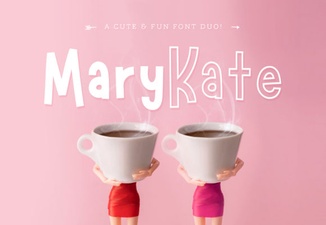 Marykate Font: Elegant & Versatile Design Tool
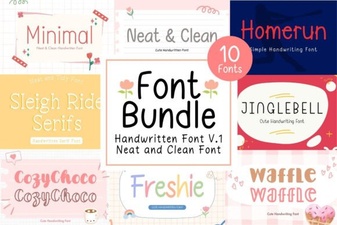 Neat & Clean Handwritten Fonts for Creative Projects
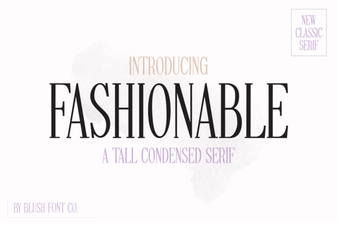 Stylish Fonts for Creative Design Projects
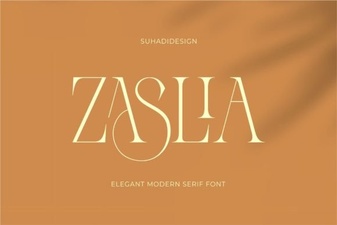 Zaslia Font: Elegant & Versatile Design Inspiration
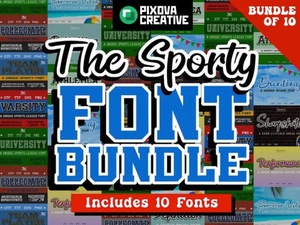 Sport Bundle Font: Creative Design & Project Ideas
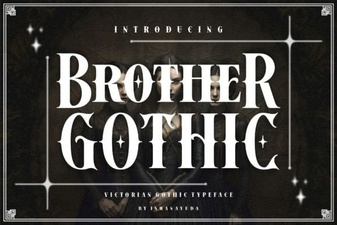 Brother Gothic Font: Bold Design Ideas